About the book
Overview and key argument
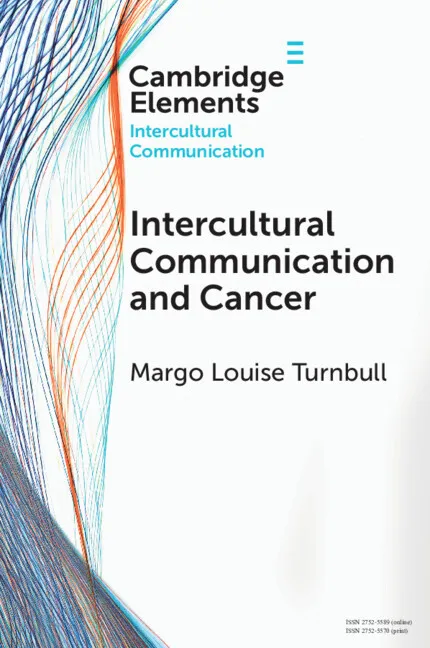
This book brings together five years of qualitative research with migrant women living with cancer in Hong Kong. It examines how health, disease, and wellbeing are understood and communicated across cultures. At its centre are the stories of Filipino domestic workers, who form one of Hong Kong’s largest migrant communities. These women navigate breast cancer diagnoses, treatment decisions, and the experience of illness far from home — in a language not their own, in a healthcare system not designed for them.
The book argues that for these women, the cancer encounter is never simply a medical event. It is a site where culture, language, power, and belonging are negotiated all at once. A doctor’s consultation becomes a space where assumptions about health literacy, patient compliance, and self-management collide with very different understandings of the body, illness, kinship, and what it means to be unwell in a foreign country. Cancer here is not a universal experience carried by universal communication. It is a profoundly intercultural one.
Drawing on critical discourse analysis and intercultural communication theory, the book traces how kinship networks, storytelling practices, and collective memory shape responses to cancer diagnoses and treatment. These responses are largely invisible to clinical providers. The book examines three further threads. How women maintain ties to home communities across distance. How remittance obligations shape decisions about whether and when to seek care. And how the experience of being a foreign body — racialised, classed, and linguistically marginalised — intersects with the experience of having a body that is ill.
Key argument
The book’s central argument is that health communication — including cancer communication — is intercultural communication, whether the people involved recognise it as such or not. When healthcare systems treat communication as a neutral channel for biomedical information, they systematically fail patients whose cultural frameworks differ from the system’s implicit assumptions. Genuine improvement in cancer outcomes for migrant communities will need more than language services. It will need a fundamental rethink of how healthcare communication is understood, trained, and practised.
Research basis
The book draws on five years of empirical research, including:
- In-depth qualitative interviews and narrative analysis with Filipino and Indonesian migrant domestic workers with cancer in Hong Kong
- Community-based collaborative fieldwork developed in partnership with migrant workers’ organisations
- Analysis of clinical and organisational communication practices in Hong Kong’s healthcare system
- Research published in Qualitative Health Research (2024), Social Science & Medicine (2025), Journal of Migration and Health (2025), and the International Journal for Equity in Health (2026)
Impact and audiences
The book speaks to four overlapping audiences. Researchers in health communication, applied linguistics, migration studies, and public health. Clinicians and health educators. Policymakers and advocates working on migrant health equity. And the growing international literature on cancer disparities.
It contributes to ongoing policy debates about multilingual healthcare, the rights of migrant workers to equitable healthcare access, and the role of language and culture in cancer outcomes. Publication by Cambridge University Press places the book within one of the world’s leading scholarly channels in the social sciences and humanities.
Related publications
- 2026 Journal Article
‘What would happen if I die in a foreign country?’: Cancer-related personal uncertainty and its implications for health equity among Indonesian migrant domestic workers
International Journal for Equity in Health
- 2025 Journal Article
Cancer as communication work: A qualitative study of Filipino migrant domestic workers with cancer in Hong Kong
Social Science & Medicine, 118477
- 2025 Journal Article
Navigating migration and cancer in Asia: A narrative analysis of stories told by Filipino migrant domestic workers with breast cancer
Journal of Migration and Health, 100337
- 2024 Journal Article
“We need to go back home (to) the Philippines healthy”: An Interpretive Phenomenological Analysis of migrant domestic workers’ experiences of having breast cancer in Hong Kong
Qualitative Health Research, 10497323241228789
- 2026 Book Chapter
Making sense of breast cancer and migration: An Interpretive Phenomenological Analysis
In Kuwada, K., Villar-Lubek, S., Thepner, M., Zhou, T., & Macioti, A. (Eds.), Discourses of Inclusive and Exclusionary Health Communication. Routledge.